
TDI vs. MDI: Understanding Isocyanates for Polyurethane Production
- Toluene Diisocyanate (TDI): The Flexible Foam Specialist
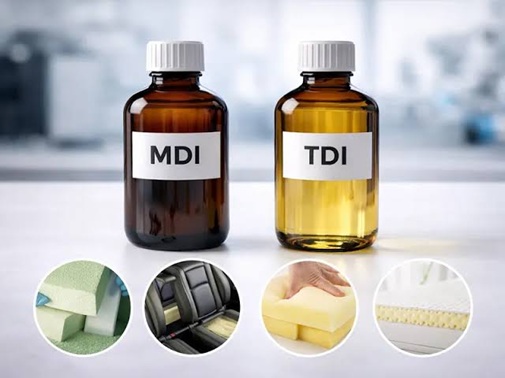
- TDI is primarily known for its role in producing flexible polyurethane foams. Its chemical structure lends itself to creating materials that are soft, elastic, and possess excellent cushioning properties. This makes TDI the preferred choice for applications such as furniture cushioning, mattresses, carpet underlay, and automotive interior seating and headliners. The 80/20 blend of TDI isomers is particularly common, offering a balanced reactivity profile for foam production. Manufacturers seeking to produce these comfort-oriented products often source TDI from specialized chemical suppliers who guarantee high purity and consistent isomer ratios.
- Methylene Diphenyl Diisocyanate (MDI): Versatility in Rigid and Beyond
- MDI, on the other hand, is renowned for its versatility and is the go-to for rigid polyurethane foams. These foams offer excellent insulation properties, making them vital for construction applications like building insulation, refrigerator insulation, and structural components. MDI also plays a significant role in producing semi-rigid foams, elastomers, coatings, and adhesives. Its higher molecular weight and lower vapor pressure compared to TDI contribute to its suitability for these diverse applications. When buying MDI, manufacturers often look for different forms, such as pure MDI or polymeric MDI (PMDI), depending on the desired end-product characteristics.
- Key Differences and Selection Criteria
- The primary distinction lies in the typical applications driven by their chemical structures and reactivity. TDI's dominance in flexible foams is due to its ability to create softer, more yielding polymers. MDI's strength lies in creating stiffer, more robust materials, particularly rigid foams with excellent thermal and structural integrity. For manufacturers, the choice between TDI and MDI depends directly on the performance requirements of their final product. If the goal is comfort and flexibility, TDI is likely the answer. If insulation, rigidity, or strength is paramount, MDI is generally the better option.
- Sourcing and Commercial Aspects
- Both TDI and MDI are produced in large quantities globally, with numerous manufacturers and suppliers available. When sourcing these chemicals, it's important to consider factors like product purity, isomer ratios (especially for TDI), and the specific grade offered (e.g., pure MDI vs. polymeric MDI). Obtaining quotes from multiple suppliers, especially those based in regions with significant chemical production like China, can help secure competitive pricing. Understanding the supply chain reliability and technical support offered by a potential manufacturer is also crucial for maintaining production continuity.
- What is an isocyanate hardener in polyurethane coatings?
An isocyanate hardener is a reactive curing component containing one or more –NCO groups. In polyurethane coating formulation, the –NCO group reacts mainly with hydroxyl groups from polyols, acrylic polyols, polyester polyols or other hydroxyl-bearing resins to form urethane linkages. This NCO–OH crosslinking builds the coating film network that controls hardness, chemical resistance, adhesion, drying behavior and long-term durability.
Raw diisocyanate monomers are rarely the preferred form for coating formulators. Commercial hardeners are usually modified into adducts, trimers, biurets, blocked isocyanates, prepolymers or hydrophilically modified polyisocyanates. These forms give better handling, lower volatility, more predictable formulation behavior and more useful application windows.
Backbone :TDI
-
Class: Aromatic
Formulator meaning :Fast reaction, high hardness and strong cost-performance; aromatic chemistry is not the first choice for exterior lightfast films.
Typical coating direction : Interior wood, furniture, inks, selected adhesives and fast-drying 2K PU systems.
Backbone : MDI
Class : Aromatic
Formulator meaning : Useful in selected prepolymer, sealer or adhesive directions where toughness and adhesion matter more than color retention.
Typical coating direction : Adhesives, sealers, elastomeric systems and selected industrial applications.
- Conclusion
- While both TDI and MDI are indispensable isocyanates for the polyurethane industry, they serve different but equally vital roles. TDI excels in providing the flexibility and comfort needed for foams in furniture and automotive interiors, while MDI enables the creation of highly insulating rigid foams and durable CASE applications. By understanding these fundamental differences and working with knowledgeable suppliers, manufacturers can effectively leverage these chemical building blocks to produce high-quality polyurethane products.


